



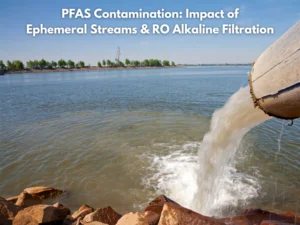
Per- and polyfluoroalkyl substances (PFAS) are a group of persistent synthetic chemicals that have become a major concern in drinking water worldwide, including Australia. Often referred to as “forever chemicals,” PFAS do not break down easily and can accumulate in the human body over time.
For Sydney households, understanding how to remove PFAS from drinking water is essential. Advanced filtration technologies such as carbon block filtration and reverse osmosis play a critical role in reducing exposure and improving water safety.
What Are PFAS and Why Are They Dangerous?
PFAS are used in industrial processes and consumer products such as non-stick cookware, firefighting foams, and water-resistant materials. These chemicals can enter water supplies through environmental contamination.
According to the World Health Organization (WHO PFAS guidance, 2022), long-term exposure to PFAS has been associated with:
- Hormonal disruption
- Immune system effects
- Increased cholesterol levels
- Potential reproductive and developmental effects
The United States Environmental Protection Agency (EPA) also states that PFAS exposure may increase the risk of certain cancers and fertility issues.
Recent News: PFAS and Infertility Concerns
Recent media coverage has highlighted growing concerns about PFAS and reproductive health. Reports from major outlets have discussed emerging research linking PFAS exposure to reduced fertility and hormonal disruption.
- The Guardian: PFAS exposure linked to fertility concerns
- ABC News Australia: PFAS health effects and reproductive risks
- Sydney Morning Herald: Growing concern over PFAS contamination
Important: While studies suggest associations, research is ongoing. I cannot confirm that PFAS directly causes infertility in all cases, but evidence indicates a potential link that warrants precaution.
How PFAS Enters Your Drinking Water
PFAS contamination can occur through:
- Industrial discharge
- Firefighting foam runoff
- Landfill leachate
- Contaminated groundwater
Even treated municipal water can contain trace levels. According to the Australian Government Water Quality Guidelines, PFAS contamination is an ongoing environmental and public health issue.
How Carbon Block Water Filters Reduce PFAS
Scientific Mechanism
Carbon block filters are made from compressed activated carbon with a very high surface area. This structure enables:
- Adsorption: PFAS molecules bind to the carbon surface
- Physical trapping: Fine pore structure captures contaminants
- Chemical attraction: Hydrophobic interactions help retain PFAS compounds
The EPA research on PFAS treatment confirms that activated carbon is one of the most effective methods for reducing PFAS, particularly long-chain compounds such as PFOA and PFOS.
Effectiveness
Performance depends on:
- Contact time
- Carbon quality
- Filter design
High-quality carbon block filters, such as those used in Filpure systems, provide significantly better PFAS reduction compared to basic granular carbon filters.
Filpure Platinum 5 Stage Reverse Osmosis System for PFAS Removal
The Filpure Platinum 5 Stage Reverse Osmosis system provides advanced drinking water purification, designed to remove PFAS and other dissolved contaminants at a molecular level.
How Reverse Osmosis Works
Reverse osmosis (RO) uses a semi-permeable membrane to separate contaminants from water under pressure.
- Pre-filtration: Sediment and carbon filters remove particles and chlorine
- RO membrane: Removes up to 90–99% of dissolved contaminants, including PFAS
- Post-filtration: Final polishing for taste and purity
According to the EPA filtration fact sheet, reverse osmosis is one of the most effective technologies for reducing PFAS in drinking water.
Why RO Is Superior for Drinking Water
- Removes microscopic contaminants
- Reduces PFAS, heavy metals, and dissolved solids
- Produces highly purified water for consumption
Complete Whole House Water Filtration for PFAS Protection
While reverse osmosis is ideal for drinking water, a complete whole house system ensures protection across your entire home.
Filpure’s complete whole house water filtration systems use advanced carbon block filtration to reduce PFAS before water reaches any tap.
Benefits of Whole House PFAS Reduction
- Filtered water for showers and baths
- Reduced skin exposure to contaminants
- Protection for children and sensitive individuals
- Cleaner water for cooking and brushing teeth
- Safer water for pets
According to the Agency for Toxic Substances and Disease Registry (ATSDR), PFAS exposure can occur not only through drinking but also through ingestion and contact, making whole house filtration a comprehensive solution.
Health Benefits of Removing PFAS from Your Water
1. Reduced Long-Term Health Risks
Minimising PFAS exposure may lower the risk of adverse health effects identified by WHO and EPA research.
2. Improved Reproductive Health Protection
Emerging studies suggest a link between PFAS and fertility concerns, making reduction an important preventative step.
3. Better Immune System Support
PFAS exposure has been associated with reduced immune response. Lower exposure supports overall health.
4. Safer Water for Children
Children are more vulnerable to environmental toxins. Filtration helps reduce exposure during critical development stages.
Combining Systems for Maximum Protection
The most effective strategy is a dual-system approach:
- Whole house filtration: Reduces PFAS and chemicals at entry point
- Reverse osmosis: Provides ultra-pure drinking water
This ensures comprehensive protection for both consumption and daily use.
Conclusion: The Best Approach to PFAS Removal in Sydney Homes
PFAS contamination is a growing concern, and taking proactive steps to reduce exposure is essential for protecting your health and your family.
Filpure offers a complete solution:
- Carbon block filtration for whole-home PFAS reduction
- Platinum 5 Stage Reverse Osmosis for advanced drinking water purification
- Systems designed specifically for Australian water conditions
For Sydney homeowners, investing in both whole house filtration and reverse osmosis provides the highest level of protection against PFAS and other harmful contaminants.
Disclaimer
Information provided is based on current scientific research and public health guidance as of 2026. PFAS health effects research is ongoing, and filtration performance may vary depending on water quality and system configuration.