



The Complete Guide to Choosing the Right Water Filtration System for Your Home
Choosing a water filter sounds simple until you actually start looking.
Under-sink filters, countertop filters, reverse osmosis, whole-house filtration, multi-stage systems, boiling water taps, chilled water taps – there are plenty of options, and they’re designed to solve different problems.
That’s why the best water filter isn’t necessarily the most expensive or the one with the most filtration stages. It’s the system that suits how you and your household actually use water.
Some households simply want better-tasting drinking water from the kitchen. Others want a more advanced level of filtration for drinking and cooking. Some want filtered water supplied throughout the entire home. And increasingly, people want filtration combined with the convenience of boiling, chilled and sparkling water on demand.
This guide breaks down the main types of water filters, what they’re designed to do, where they fit and what you should consider before choosing one.
If you’re ready to compare systems, you can also explore Filpure’s range of water filters.
Start With What You Want From Your Water Filter
Before comparing individual systems, start with a simpler question:
What do you actually want to improve?
For example, you might be looking for:
- Better-tasting drinking water
- A reduction in chlorine taste and odour
- More advanced drinking water filtration
- Filtered water for drinking and cooking
- Filtration throughout your entire property
- A compact system that doesn’t take up benchtop space
- An alternative to regularly buying bottled water
- Instant chilled water
- Instant boiling water
- Sparkling water on demand
- A combination of filtration and convenience
Once you understand the problem you want your water filter to solve, comparing systems becomes much easier.
There isn’t one universal filtration system that’s right for every household.
What Does a Water Filter Actually Do?
At its simplest, a water filter passes water through one or more filtration stages designed to reduce particular substances, tastes, odours or particles.
Different filtration systems work in different ways.
A basic countertop system, for example, has a very different purpose from a reverse osmosis system. Likewise, a whole-house water filter is designed for a different job again.
That’s why looking at the words “water filter” alone doesn’t tell you enough.
You need to consider:
What is being filtered? Where is it being filtered? What filtration technology is being used? And how much water does the system need to handle?
The answers will point you towards the right category of system.
The Main Types of Water Filters for Your Home
Let’s look at the main options.
1. Under-Sink Water Filters
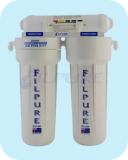
An under-sink water filter is one of the most practical choices for households primarily concerned with their drinking and cooking water.
As the name suggests, the filtration equipment is installed underneath the kitchen sink. Filtered water can then be delivered through a dedicated drinking water tap, depending on the system.
The major benefit is simplicity.
You can have filtered water readily available in the kitchen without a bulky filtration unit taking up space on your benchtop.
Under-sink systems can also incorporate multiple filtration stages, meaning there are options available for households with different filtration requirements.
They’re worth considering if you:
- Primarily want filtered drinking water
- Want a permanent kitchen solution
- Prefer to keep the filtration equipment out of sight
- Regularly use filtered water for cooking
- Don’t necessarily need every tap in the house filtered
For many households, this provides a practical balance between filtration, convenience and cost.
2. Reverse Osmosis Water Filters
For households looking for more advanced drinking water filtration, reverse osmosis – commonly shortened to RO – is another option.
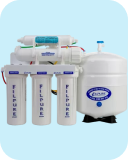
A reverse osmosis water filter uses a specialised membrane as part of the filtration process.
Rather than simply passing water through conventional filter media, the membrane provides an additional filtration stage designed to separate water from a broad range of dissolved substances and unwanted contaminants.
Reverse osmosis systems are generally focused on drinking and cooking water rather than filtering the entire household supply.
That distinction is important.
If your priority is highly filtered water in your kitchen, an RO system may make sense. If your priority is filtering the water supplied to showers, bathrooms, laundry and other outlets as well, you may want to look at whole-house filtration instead.
You can learn more by exploring Filpure’s reverse osmosis water filter systems.
3. Whole-House Water Filters
A whole-house system takes a different approach.
Rather than filtering water at one kitchen tap, a whole-house water filter is installed on the incoming water line.
This means water is filtered before it continues through the property’s plumbing.
Depending on the system and property setup, this can provide filtered water to multiple outlets throughout the home.
That makes whole-house filtration particularly appealing to households that don’t want filtration limited to drinking water.
It can be useful if you’re thinking about the water used for:
- Kitchen taps
- Bathrooms
- Showers
- Laundry
- Household appliances
Whole-house systems also need to be capable of handling significantly higher water flow than a drinking water filter. A household may have showers, taps and appliances operating at the same time, so selecting the right system and capacity matters.
You can compare Filpure whole-house water filtration systems if this is closer to what you’re trying to achieve.
Reverse Osmosis vs Whole-House Filtration
These two systems are often compared, but they’re not necessarily competitors.
They solve different problems.
Reverse osmosis is typically used to provide more advanced filtration for drinking and cooking water at a particular point of use.
Whole-house filtration is designed to treat larger volumes of water as they enter the property.
Some households may therefore benefit from one system, while others may decide that the two systems complement each other.
For example, you might use whole-house filtration for the broader household water supply and reverse osmosis specifically for drinking water.
The right setup comes down to what you want to achieve.
For a more detailed comparison of different systems, read our guide to understanding the value of each type of water filter.
4. Countertop Water Filters
Not everybody wants permanent plumbing changes.
That’s where countertop water filters can be useful.
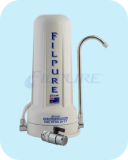
A countertop or benchtop filter provides a comparatively simple way to access filtered drinking water without installing a full under-sink system.
They can be particularly useful for:
- Renters
- Apartments
- Smaller kitchens
- Households wanting a straightforward filtration option
- People who may move the system in the future
The trade-off is that the unit occupies some benchtop space.
For someone who values flexibility over having the system completely hidden, however, that may be a worthwhile compromise.
5. Boiling, Chilled & Sparkling Water Systems
Filtration isn’t always just about water quality.
Sometimes it’s also about making filtered water more convenient to use.
Modern boiling, chilled and sparkling water systems can combine filtration with instant access to different types of water from a single tap.
Depending on the system, you may have access to:
- Boiling filtered water
- Chilled filtered water
- Sparkling filtered water
- Ambient filtered water
This can change how the kitchen is used day to day.
Instead of waiting for the kettle, storing bottles of chilled water in the fridge or continually purchasing sparkling water, you can have those options available directly from your tap.
It’s less about adding another appliance and more about consolidating several everyday functions.
If you’re considering this type of setup, read our guide: Are Boiling, Chilled & Sparkling Water Taps Worth It?
You can also explore Filpure’s boiling, chilled and sparkling water systems.
Which Water Filter Is Best for Drinking Water?
This is one of the most common questions, and the answer depends on what you mean by “best”.
If you’re looking for a straightforward improvement to everyday drinking water, an under-sink or countertop filter may be enough.
If you want more advanced purification, you might look towards a reverse osmosis system.
If you want filtered water throughout your property, whole-house filtration may be more appropriate.
And if convenience is just as important as filtration, an integrated boiling, chilled or sparkling system might offer more value in everyday use.
The mistake is assuming that a more complex system is automatically better.
A good filtration system should match the job you’re asking it to do.
Consider How Much Filtered Water You Actually Use
Household size matters too.
A single person or couple may use a filtration system very differently from a large family.
Think about:
- How many people live in the home?
- How much drinking water do you use?
- Do you regularly cook with filtered water?
- How often do you make tea or coffee?
- Do you fill reusable bottles every day?
- Are multiple bathrooms used at the same time?
- Do you regularly buy bottled or sparkling water?
These everyday habits can tell you much more about the system you need than simply looking for the most powerful filter.
Think About Available Space
Space is another practical consideration that often gets overlooked.
Where will the filtration system actually go?
If you have limited kitchen storage, an oversized under-sink system may not suit your layout.
If you have very little benchtop space, a countertop system might not be ideal either.
Whole-house systems require an appropriate installation location, while boiling and chilled systems generally require sufficient under-bench space for their equipment.
The best solution needs to work with your home, not against it.
Look Beyond the Initial Purchase Price
When comparing water filters, don’t focus exclusively on the upfront price.
Consider the complete ownership experience.
That includes:
- Initial system price
- Installation
- Replacement cartridges
- Filter replacement frequency
- Servicing requirements
- Availability of replacement parts
- Support if something goes wrong
- Expected long-term use
A cheap filtration system isn’t necessarily good value if replacement cartridges are difficult to find or support disappears after purchase.
Likewise, an expensive system isn’t automatically better simply because it carries a premium price.
Value comes from getting the right filtration performance, reliability, support and convenience for what you actually need.
We explore this further in Why a Quality Water Filter Doesn’t Have to Cost More: Understanding the Value of Filpure.
Don’t Forget Replacement Filters
Every filtration system requires ongoing maintenance.
Filters do the work, which means they eventually need replacing.
The replacement schedule depends on the system, the filter media, usage and water conditions.
Before purchasing, ask:
- Which cartridges does the system use?
- How often are they generally replaced?
- Are replacements readily available?
- Can I replace them myself?
- Is servicing available?
- How will I know when replacement is due?
Buying the filtration system is only the beginning.
A system that is easy to maintain is far more likely to keep delivering value years after installation.
Is a Water Filter Better Than Bottled Water?
For many households, installing a water filter is partly about reducing their reliance on bottled water.
If you regularly purchase bottled drinking water, having filtered water available at home can be considerably more convenient.
There’s no need to continually transport and store packs of bottles, and reusable bottles can simply be filled before leaving home.
The same principle applies to sparkling water.
For households that consume it regularly, an integrated sparkling water system can reduce the need to continually buy individual bottles.
The real benefit is making the water you want easier to access.
What About Water Taste?
Taste is one of the first things many people notice after changing how their drinking water is filtered.
Chlorine taste, odour and other characteristics can influence whether someone actually enjoys drinking tap water.
This matters more than it might seem.
A filtration system can have impressive specifications, but if the end result is water that you enjoy drinking and can access conveniently, that’s where much of the everyday value comes from.
Why the Right Water Filter Is Different for Every Household
There is no universal answer to “What is the best water filter?”
A family wanting filtration throughout a large home has different needs from someone renting an apartment.
A household that drinks litres of sparkling water every week has different priorities from someone who simply wants filtered water for tea and cooking.
Someone interested in advanced drinking water purification may look towards reverse osmosis, while another household may be perfectly happy with a simpler under-sink system.
That’s why choosing a water filter should start with your lifestyle rather than a product specification sheet.
Questions to Ask Before Choosing a Water Filter
Before making your decision, work through these questions:
1. What do I want filtered?
Just drinking water, or water throughout the home?
2. What am I trying to improve?
Taste, odour, particular substances, convenience or a combination?
3. How much filtered water will we use?
Consider the number of people in the household and everyday habits.
4. Where can the system be installed?
Under the sink, on the benchtop or on the incoming water supply?
5. How advanced does the filtration need to be?
A standard filtration system and reverse osmosis system aren’t designed for exactly the same purpose.
6. Do I want additional functionality?
Boiling, chilled and sparkling options may be worth considering.
7. What will ongoing maintenance involve?
Understand cartridge replacements and servicing before purchasing.
Answer those questions and your shortlist will become much clearer.
Find a Water Filtration System That Fits Your Home
The right water filtration system isn’t the one with the longest list of features. It’s the one that delivers the type of filtered water you want, where you want it, in a way that fits naturally into everyday life.
Filpure offers a broad range of filtration options, from countertop and under-sink filters through to reverse osmosis, whole-house filtration and integrated boiling, chilled and sparkling systems.
Instead of guessing which option is right, compare systems based on your household, water usage, available space and filtration goals.
Ready to find the right setup?
Explore Filpure’s water filter range or speak with the Filpure team about the filtration system that best suits your needs.
Search
Blogs

Get Your Water Filter Today – Because Health Can’t Wait!
Prioritize your health — get your water filter today and start living a healthier life. Pure water in every sip, better living every day!
FROM THE AUTHOR