



Is Reverse Osmosis Water Worth It? Everything Australian Homeowners Need to Know
If you’re wondering whether Reverse Osmosis is worth the investment, the short answer is yes, for many Australian households, it can provide some of the highest-quality drinking water available. A Reverse Osmosis system removes a wide range of dissolved contaminants, improves taste, reduces unwanted odours, and delivers consistently filtered water directly from your tap. However, whether it’s the right solution depends on your water quality, household needs, and budget. At Filpure, we help homeowners understand the differences between Water Filters, explain how Reverse Osmosis works, and recommend systems that suit individual homes rather than taking a one-size-fits-all approach.
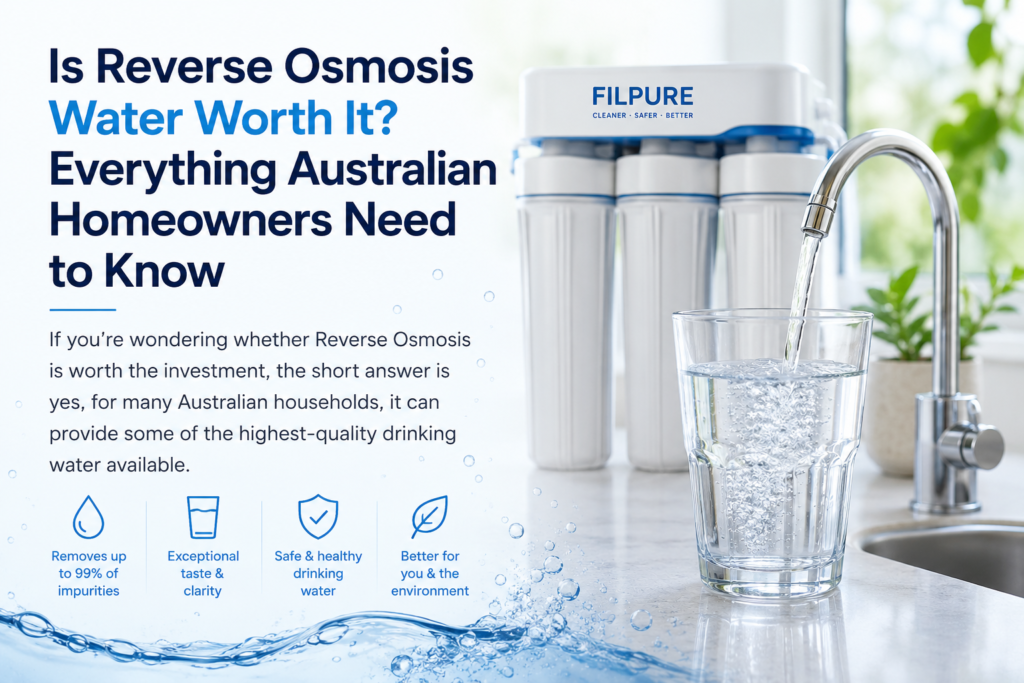
What Is Reverse Osmosis?
Reverse Osmosis is an advanced water filtration process that forces water through a specialised semi-permeable membrane.
The membrane allows water molecules to pass while blocking many dissolved contaminants that standard Water Filters cannot remove.
Unlike basic filtration systems that mainly improve taste and odour, Reverse Osmosis targets microscopic impurities within the water itself.
A Reverse Osmosis system typically removes:
- Dissolved salts
- Heavy metals such as lead
- Chlorine
- Fluoride (depending on the system)
- Nitrates
- Sediment
- Many chemicals
- Certain bacteria and viruses when paired with additional filtration stages
This makes Reverse Osmosis one of the most comprehensive household water filtration methods available.
How Does Reverse Osmosis Work?
Most residential Reverse Osmosis systems use several filtration stages before and after the membrane.
A typical system includes:
- Sediment pre-filter
- Activated carbon filter
- Reverse Osmosis membrane
- Post-carbon polishing filter
Some premium systems also include:
- Remineralisation cartridges
- UV sterilisation
- Additional carbon stages
Each stage has a specific purpose, producing clean, fresh-tasting drinking water.
Why Are More Australians Choosing Reverse Osmosis?
Australian tap water is generally safe to drink, but many homeowners still choose additional filtration.
Water can travel through aging infrastructure, household plumbing and storage systems before reaching your tap.
This may affect:
- Taste
- Odour
- Mineral content
- Chlorine levels
- Overall drinking experience
A Reverse Osmosis system offers peace of mind by providing another level of filtration at the point of use.
Many homeowners install these systems because they want greater control over the quality of the water they drink every day.
What Does Reverse Osmosis Remove?
One reason Reverse Osmosis is so popular is its ability to remove contaminants that many standard Water Filters cannot.
Depending on the system, it may significantly reduce:
- Chlorine
- Lead
- Arsenic
- Mercury
- Copper
- Nitrates
- Sodium
- PFAS (with suitable certified systems)
- Microplastics
- Unpleasant tastes and odours
It’s important to remember that no filtration system removes absolutely everything, and performance varies depending on water conditions and system design.
Is Reverse Osmosis Better Than Standard Water Filters?
This is one of the most common questions homeowners ask.
The answer depends on what you want your filtration system to achieve.
| Standard Water Filters | Reverse Osmosis |
| Improve taste | Excellent taste improvement |
| Reduce chlorine | Removes chlorine plus many dissolved contaminants |
| Lower purchase cost | Higher initial investment |
| Simpler maintenance | More filtration stages |
| Suitable for general filtration | Suitable for premium drinking water |
If your primary goal is improving taste, a quality carbon Water Filter may be sufficient.
If you want one of the highest levels of drinking water purification available for homes, Reverse Osmosis is usually the better choice.
Is Reverse Osmosis Worth the Cost?
For many households, yes.
Although Reverse Osmosis systems generally cost more than basic Water Filters, they provide significantly more comprehensive filtration.
Benefits often include:
- Better tasting drinking water
- Reduced reliance on bottled water
- Convenient filtered water from the tap
- Long-term value
- Greater confidence in water quality
Many homeowners find the ongoing savings from purchasing fewer bottled water products help offset the investment over time.
Are There Any Downsides to Reverse Osmosis?
Every filtration system has advantages and limitations.
Some considerations include:
Initial Cost
Reverse Osmosis systems generally cost more than entry-level filtration units.
Filter Replacement
Multiple filters require periodic replacement to maintain performance.
Water Usage
Traditional Reverse Osmosis systems produce wastewater during filtration, although many modern systems are becoming increasingly efficient.
Mineral Removal
Because Reverse Osmosis removes dissolved minerals along with contaminants, some homeowners prefer systems with remineralisation cartridges to restore beneficial minerals and improve taste.
Who Should Consider Reverse Osmosis?
A Reverse Osmosis system may be suitable if you:
- Drink large amounts of tap water
- Want premium-quality drinking water
- Prefer reducing bottled water purchases
- Have concerns about taste or odour
- Want advanced filtration technology
- Have family members with specific water quality preferences
It can also be an excellent choice during kitchen renovations or new home builds where filtered water is part of the design.
How Does Filpure Help Homeowners Choose the Right System?
Choosing the right filtration system isn’t simply about buying the most expensive option.
At Filpure, we believe every household has different requirements.
Our team helps homeowners compare:
- Reverse Osmosis systems
- Under sink Water Filters
- Whole house Water Filters
- Drinking water systems
- Replacement filter options
Rather than recommending one solution for everyone, we focus on matching filtration to your household’s water quality, usage and budget.
This practical approach helps homeowners make informed decisions with confidence.
Is Reverse Osmosis Safe?
Yes.
When properly installed and maintained, Reverse Osmosis systems provide safe drinking water and are widely used in residential, commercial and industrial applications worldwide.
Like all filtration systems, performance depends on:
- Correct installation
- Quality components
- Regular filter replacement
- Following manufacturer recommendations
Routine maintenance helps ensure consistent water quality throughout the life of the system.
Reverse Osmosis vs Bottled Water
Many households purchase bottled water because they prefer the taste.
However, installing Reverse Osmosis at home offers several advantages.
Reverse Osmosis
- Unlimited filtered drinking water
- Less plastic waste
- Convenient tap access
- Lower ongoing costs
- Consistent water quality
Bottled Water
- Ongoing purchase costs
- Plastic waste
- Storage requirements
- Variable quality depending on brand
For families that regularly buy bottled water, Reverse Osmosis can become a cost-effective long-term investment.
What Should You Look for in a Reverse Osmosis System?
Not all systems are identical.
When comparing options, consider:
- Number of filtration stages
- Certified filtration performance
- Filter replacement availability
- Water efficiency
- Warranty
- Installation support
- Ongoing maintenance
A reputable supplier can explain these differences and recommend the most suitable solution.
Frequently Asked Questions
Is Reverse Osmosis worth it for Australian homes?
For many Australian households, yes. Reverse Osmosis provides advanced filtration, excellent tasting drinking water and can reduce reliance on bottled water.
Does Reverse Osmosis remove healthy minerals?
Yes, Reverse Osmosis removes many dissolved minerals along with contaminants. Some systems include remineralisation filters that restore selected minerals after filtration.
Is Reverse Osmosis better than a standard Water Filter?
It depends on your goals. Standard Water Filters are excellent for improving taste and reducing chlorine, while Reverse Osmosis provides a much higher level of purification.
How often do Reverse Osmosis filters need replacing?
Replacement intervals vary by system and water usage. Most pre-filters are replaced every 6–12 months, while membranes often last several years.
Can Reverse Osmosis help improve the taste of tap water?
Yes. One of the biggest reasons homeowners choose Reverse Osmosis is the noticeably cleaner, fresher taste it provides.
Why Homeowners Trust Filpure
At Filpure, helping Australian homeowners choose the right water filtration solution is just as important as supplying quality products. Our team understands that every home’s water quality, usage and budget are different. That’s why we take the time to recommend practical solutions that deliver long-term value rather than simply recommending the most expensive option.
Whether you’re comparing Water Filters, researching Reverse Osmosis, or upgrading your existing drinking water system, we’re here to help you make an informed decision with confidence.
You may also find these Filpure resources helpful:
- Water Filters Buying Guide
- Under Sink Water Filters
- Whole House Water Filters
- Replacement Water Filters
Is Reverse Osmosis Worth It? Final Thoughts
For homeowners looking for one of the most comprehensive home water filtration solutions available, Reverse Osmosis is often an excellent investment. It delivers outstanding drinking water quality, improves taste, reduces many dissolved contaminants and provides convenient filtered water directly from the tap.
The best system depends on your household’s specific needs, which is why expert advice makes a real difference.
If you’re considering Reverse Osmosis or comparing different Water Filters, contact the team at Filpure, we can help you understand your options and recommend a filtration system that suits your home, your lifestyle and your budget.
Search
Blogs

Get Your Water Filter Today – Because Health Can’t Wait!
Prioritize your health — get your water filter today and start living a healthier life. Pure water in every sip, better living every day!
FROM THE AUTHOR